

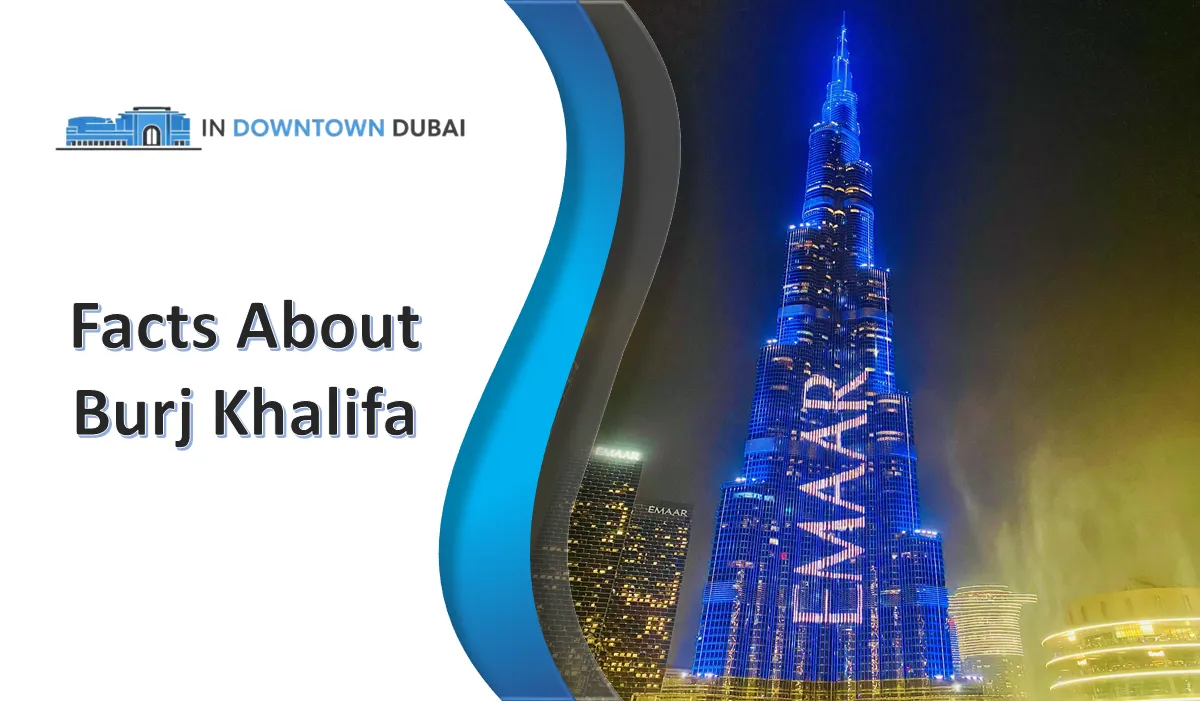
Burj Khalifa is one of Dubai’s most famous landmarks, attracting tourists and families from around the world. While many people know it for its impressive size and world records, there are plenty of lesser known details that make the building even more interesting.
In this guide, you will discover 10 interesting facts about Burj Khalifa, covering its unique design, fast elevators, deep foundation, cleaning system, water collection, construction and even why sunset can be seen later from its higher floors.
1. Burj Khalifa Is 828 Metres Tall
Burj Khalifa has an architectural height of 828 metres, or about 2,717 feet. Its highest point, including the tip, reaches 829.8 metres.
The building also reaches 585.4 metres at its highest occupied floor. The Level 148 observation deck sits about 555.7 metres above the ground. These different measurements explain why you may see more than one height listed for Burj Khalifa.
The difference comes down to how the building’s height is measured. 828 metres is the standard architectural height used for Burj Khalifa in global skyscraper rankings.
2. You Can See The Sunset Later From Higher Floors
One of the most interesting Burj Khalifa facts is that you can see the sunset a few minutes later from the higher floors than from the ground.
The reason is simple. The higher you go, the farther you can see across the Earth’s curved surface. Because of this, the sun can stay visible from an upper floor even after it has disappeared from view at ground level.
At Burj Khalifa, the difference can be around two to three minutes. People on floors 80 to 150 may see the sunset about two minutes later, while those above the 150th floor may see it around three minutes later.
This means your view of the sunset can actually change depending on how high you are in the building.
3. Burj Khalifa Has 163 Floors, But 160 Are Habitable
Burj Khalifa is often said to have 163 floors. However, the official figures give more detail. The building has 160 habitable floors and more than 200 storeys in total.
The difference comes from how the tower’s levels are counted. Not every level is used for homes, offices, hotels, or public areas. Some contain mechanical, technical, communication, and other building services.
This is why you may see 163 floors, 160 habitable levels, or 200 storeys when reading about Burj Khalifa. These figures reflect different ways of counting the tower’s occupied and technical levels.
4. Its Fastest Elevators Travel At 10 Metres Per Second
Burj Khalifa has 57 elevators and eight escalators. Its double deck observation elevators can travel at 10 metres per second, allowing people to reach the upper levels in a short time.
The tower also has a large service elevator that can carry up to 5,500 kilograms. It travels 504 metres inside the building and is one of the tallest service elevators in the world.
The observation elevators have double deck cabins, with space for around 12 to 14 people in each cabin. With so many people using the tower each day, this fast elevator system helps keep movement through the building smooth.
5. Cleaning The Entire Exterior Takes Three to Four Months
Keeping Burj Khalifa clean is a huge job. Its exterior has nearly 26,000 glass panels, so cleaning the whole building takes around three to four months.
Special track mounted machines and manned cradles help cleaning teams reach the glass at different heights. Each glass panel weighs about 362 kilograms and was specially cut for the tower.
Once the cleaning cycle is finished, the work starts again as part of the building’s regular maintenance. This means the exterior needs almost constant care to keep it clean.
6. Its Air Conditioning System Produces Millions of Litres of Reusable Water
Burj Khalifa has a system that collects water produced by its air conditioning units. Instead of letting this water go to waste, the building collects it and uses it for other needs.
The system provides about 15 million gallons of water each year, which is roughly 56.8 million litres. That is about the same amount of water as 20 Olympic sized swimming pools.
Burj Khalifa uses an average of about 946,000 litres of water every day. The collected water helps provide part of the building’s additional water needs.
This is one of the interesting features that helps the huge tower use its resources more efficiently.
7. There Are 2,909 Stairs To Level 160
Burj Khalifa has 2,909 stairs leading to Level 160. Above this level, ladders are used to reach some of the higher areas of the tower.
The stairs also play an important role in the building’s safety system. They are protected with fire resistant concrete, and air conditioned, pressurised refuge areas are placed about every 25 floors.
These features give people protected routes and safe areas to use during an emergency. These features give people protected routes and safe areas to use during an emergency.
8. The Design Was Inspired By Desert Flower
that grows in the region. The tower has three wings that extend from a central core, giving it its distinctive Y shaped design.
This shape also helps the building handle strong winds. As the tower rises, the wings gradually step back, changing the shape at different levels. This helps reduce the effect of wind on the structure.
Before construction, the design team carried out more than 40 wind tunnel tests. These tests helped them study how wind would affect the tower and the cranes used during construction.
9. The Foundation Uses 43 Metre Long Concrete Piles
Burj Khalifa needs a very strong foundation to support its huge structure. The tower sits on a reinforced concrete mat that is 3.7 metres thick. Building this mat required 12,500 cubic metres of concrete, poured in four sections.
Under the mat are 192 concrete piles. Each pile is 1.5 metres wide and 43 metres long, with the piles reaching more than 50 metres below the ground.
The foundation helps spread the tower’s weight and keeps the structure stable. It is one of the key parts that allows Burj Khalifa to rise hundreds of metres above the ground.
10. Burj Khalifa Is More Than an Observation Tower
Burj Khalifa is home to much more than observation decks. The building includes a hotel, private residences, corporate suites, restaurants and other facilities across its different levels.
Armani Hotel Dubai occupies the Concourse Level to Level 8, as well as Levels 38 and 39. The Armani Residences are on Levels 9 to 16, while private residences are located on Levels 45 to 108. Corporate Suites occupy several higher levels.
The tower also has Sky Lobbies on Levels 43, 76 and 123. The Sky Lobbies on Levels 43 and 76 include swimming pools, fitness centres and recreational areas.
With homes, offices, hotel rooms and leisure facilities in the same tower, Burj Khalifa works much like a small vertical city.
Conclusion
Burj Khalifa is more than a record breaking skyscraper. Its smart design, advanced systems and careful planning make it one of the most remarkable buildings in Dubai.
From the flower inspired shape to the way it handles water, wind and daily maintenance, each part has a clear purpose.
These interesting facts show why Burj Khalifa continues to attract people from around the world. W
hether you are planning a visit or simply curious about Dubai’s famous landmark, there is much more to discover beyond what you can see from the ground.
