

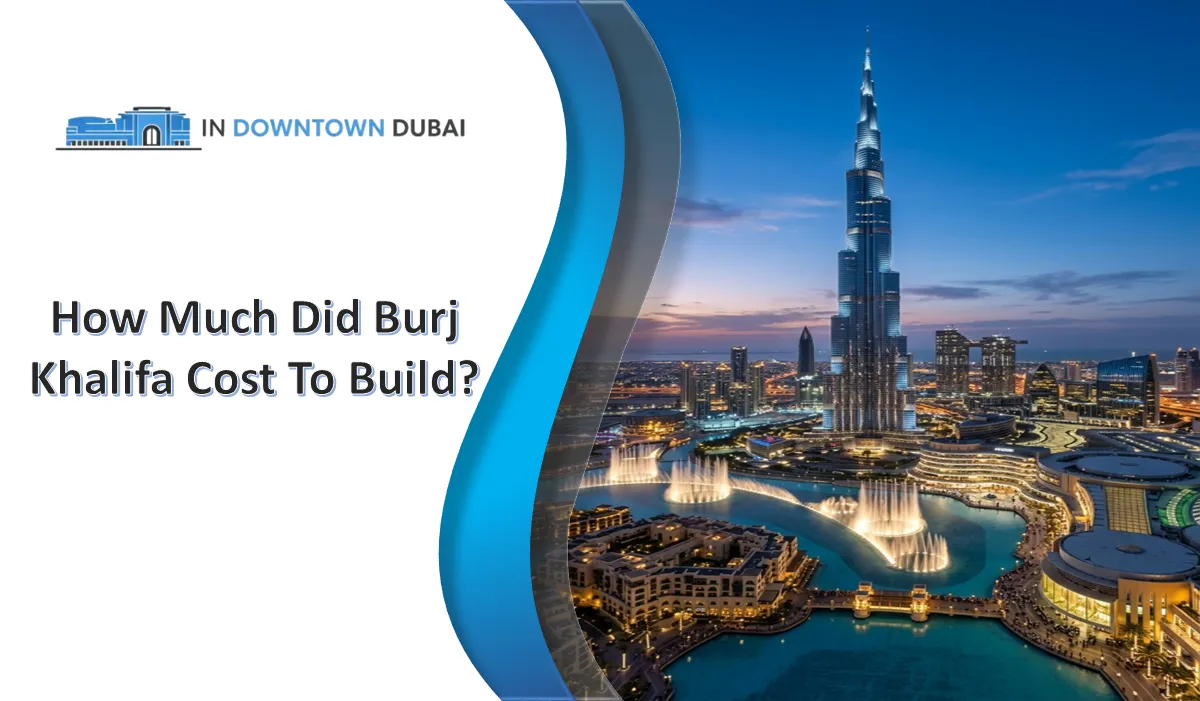
Burj Khalifa cost an estimated US$1.5 billion to build, which is about AED 5.5 billion or approximately ₹13,000 crore. But what made the world’s tallest building so expensive to construct? The answer goes far beyond its height.
The 828 metre tower required huge amounts of concrete, steel, glass, specialist equipment, engineering, and labour.
Below, we break down where the reported $1.5 billion went, how much material the tower used, and why building Burj Khalifa required such a large investment.
Burj Khalifa Budget
The main project figures give a clear picture of the scale of the construction. These numbers also help explain why the tower required such a large investment.
- Estimated Construction Cost: About US$1.5 billion
- Approximate Value in UAE Dirhams: About AED 5.5 billion
- Approximate Value in Indian Rupees: About ₹13,000 crore
- Concrete Used: About 330,000 cubic metres
- Steel Reinforcement: About 39,000 tonnes
- Glass Used: About 103,000 square metres
- Foundation Piles: 192
- Peak Workforce: More than 12,000 professionals and skilled workers
- Construction Work: About 22 million man-hours
These figures show the scale behind the US$1.5 billion estimate. The cost covered years of structural work, specialist engineering, materials, equipment, building systems, interior work, and a very large construction workforce.
Is the $1.5 Billion Figure the Exact Cost of Burj Khalifa?
The US$1.5 billion figure is widely reported as Burj Khalifa’s estimated construction cost, but it is not an exact audited final figure. A detailed public breakdown of the project’s final spending is not available.
Some websites give exact costs for individual parts, such as the foundation, facade, elevators, and mechanical systems.
Unless verified project records support them, these figures should be treated as estimates. For the overall construction cost, about US$1.5 billion remains the widely reported figure.
Where Did the $1.5 Billion Go?
The reported $1.5 billion construction cost covered the tower’s structure, foundation, façade, building systems, interiors, equipment, and labour.
Exact spending for each category is not publicly available, so the figures below describe the main areas of construction rather than fixed cost allocations.
Foundation and Substructure
Burj Khalifa stands on a reinforced concrete foundation supported by 192 bored piles. Its foundation mat is about 3.7 metres thick and used around 12,500 cubic metres of concrete.
The foundation had to support the enormous weight of the 828 metre tower and provide stability in Dubai’s sandy ground conditions.
Superstructure
The tower uses a Y-shaped plan and buttressed core made mainly from reinforced concrete. The three wings support the central core and gradually reduce as the building rises, helping control wind forces.
During construction, high-performance concrete was pumped to 601 metres above ground. The concrete used at that height had a strength of 80 megapascals.
Glass and Exterior Facade
The facade contains about 103,000 square metres of glass, along with aluminium and other materials. It had to withstand Dubai’s heat and strong winds at different heights.
The project also set a record by installing the aluminium and glass façade at a height of 512 metres.
Mechanical, Electrical and Plumbing Systems
The tower requires extensive systems for cooling, electricity, water, drainage, ventilation, and fire safety.
Mechanical floors contain equipment such as electrical substations, water tanks, pumps, and air-handling systems.
These services support the building’s hotel, residential, office, restaurant, and observation areas.
Elevators and Vertical Transportation
Burj Khalifa has 57 elevators and eight escalators serving its different areas. Its service elevator can carry up to 5,500 kilograms.
The tower’s height required specialist elevator systems to move people and equipment efficiently between its many levels.
Interior Fit-Out
The building contains hotel rooms, residences, corporate suites, restaurants, observation areas, and shared spaces. These areas required finishes, lighting, electrical systems, plumbing, and other installations.
The Armani Hotel forms part of the tower, while the interiors also feature materials such as glass, stainless steel, polished dark stone, silver travertine, and Venetian stucco.
Labour and Construction Logistics
More than 12,000 workers from over 100 countries worked on the project at its peak. Construction required about 22 million man-hours.
High-capacity construction hoists moved workers and materials at speeds of up to 120 metres per minute. Managing people, materials, and equipment across a 828 metre tower required careful planning and specialist construction methods.
Together, these areas show the scale of work behind the reported $1.5 billion figure. The cost covered far more than the visible structure, including the systems, interiors, equipment, and labour needed to complete the tower.
How Much Concrete and Steel Were Used to Build Burj Khalifa?
Burj Khalifa used huge quantities of structural materials. The main figures include:
- Concrete: About 330,000 cubic metres
- Steel reinforcement: About 39,000 tonnes
- Glass: About 103,000 square metres
- Foundation piles: 192
These figures show the physical scale behind the reported construction cost. The amount of material also helps explain why the project needed careful planning, specialist equipment, and a large workforce.
How Long Did It Take to Build Burj Khalifa?
It took six years to build Burj Khalifa, from January 2004 to January 2010. The tower officially opened on January 4, 2010, after structural construction was completed in June 2008 and exterior cladding in September 2009.
The final phase focused on completing the remaining interior work, building systems, testing, and preparations before the tower opened to the public.
Burj Khalifa Construction Cost vs Downtown Dubai Development Cost
| Project | Reported Cost | What the Cost Covers |
|---|---|---|
| Burj Khalifa | About US$1.5 billion | Construction of the 828 metre tower |
| Downtown Dubai Development | About US$20 billion | The wider mixed use development around Burj Khalifa |
The US$1.5 billion figure refers to Burj Khalifa itself. The US$20 billion figure covers the much larger Downtown Dubai development, which includes residential, commercial, retail, hospitality, entertainment, and public areas.
Burj Khalifa is one part of this wider development, so the two figures should not be added together as separate costs for the same tower.
Conclusion
Burj Khalifa shows how construction costs can rise sharply when a building pushes the limits of height, engineering, and design.
Its reported cost reflects the challenge of creating a stable, functional building at an exceptional scale, where every major part had to work together.
This makes Burj Khalifa a useful example of the financial and technical demands involved in building one of the world’s tallest structures.
